
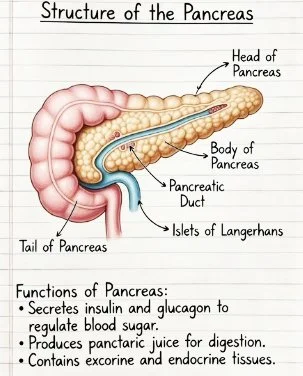
The pancreas is an organ of the digestive system and endocrine system. In humans, it is located in the abdomen behind the stomach and functions as both and endocrine gland and an exocrine gland. As an endocrine gland, it functions mostly to regulate blood sugar by releasing insulin, glucagon, somatostatin and pancreatic polypeptide. As a part of the digestive system, it functions as an exocrine gland secreting pancreatic juice into the duodenum through the pancreatic duct. This juice contains bicarbonate, which neutralizes acid entering the duodenum from the stomach; and digestive enzymes, which break down carbohydrates, proteins, and fats in food entering the duodenum from the stomach.
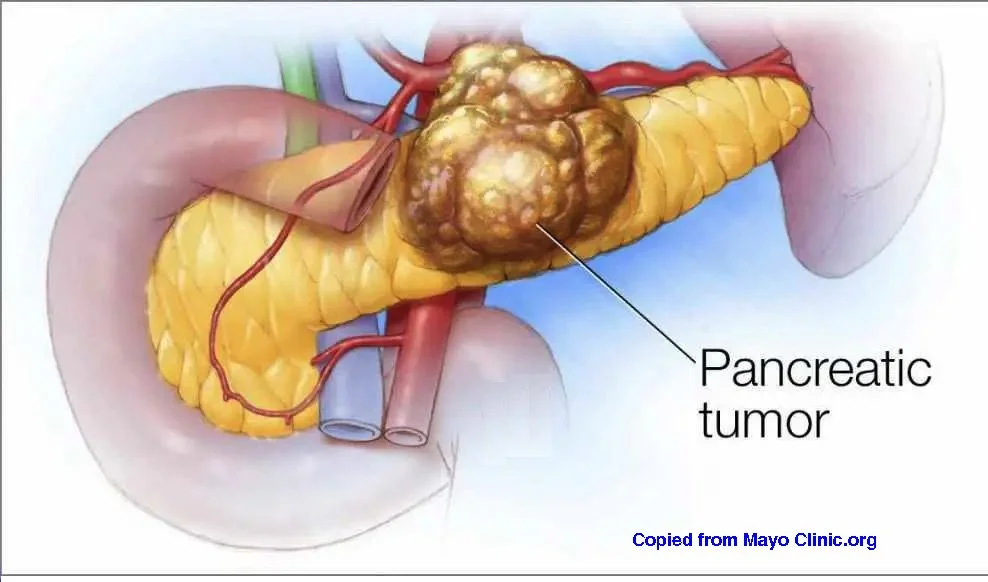
Pancreatic Cancer is one of the most feared of cancers because in the early stages of the disease it displays no symptoms. The predominant form of pancreatic cancer is adenocarcinoma that arises in the pancreatic duct, and frequently does not develop until after the age of 40. The disease is most frequently diagnosed when the tumor becomes large or has spread to other organs.
The cancer becomes evident when patients experience unexplained fatigue, jaundice, weight loss, back pain, and an abdominal mass, usually because the cancer has metastasized to liver, kidney, lung, abdomen and/or breast tissues before it becomes evident. Long term survival is usually less than 5 years, and it is not uncommon for patients to expire quickly after the cancer is detected because detection occurred so late in the disease process.
Diagnosis is usually based on imaging of an unexpected abdominal mass. A recently developed blood test detecting four tumor marker proteins known as carbohydrate antigen 19-9 (CA19-9), Aminopeptidase N (ANPEP), Thrombospondin 2 (THBS2), and polymeric immunoglobin receptor (PIGR) detected early stage disease in 95% of patients tested (Clin Cancer Res (2026) 32 (4): 756–769.) Recently, a new drug, daraxonrasib, targeting KRAS mutations, was reported to double survival rate in a small number of patient tested. As of July, 2026, this drug has not yet been approved by the FDA. The NDA is under review, and the drug has been granted Breakthrough Therapy Designation allowing patients with pretreated pancreatic cancer access outside of traditional clinical trials.
